Microsoft CEO Satya Nadella made an important point this week. He said businesses should treat large language models as insider risks and assume they may already be compromised. He also said model makers shouldn't be trusted to test their own products.¹
I agree, and the principle goes further than he takes it. If builders shouldn't grade their own homework, then no single part of the industry should define what "safe" means on its own. AI safety has to be a shared responsibility.
Where Nadella is right
The design rules he lays out are sound engineering:
- Separate the supply of AI intelligence from authority over it.
- Keep controls, logging and shutdown outside the model.
- Never let a model verify its own work.
- Let authorized people pause or stop a model mid-task.
His closing line sets the bar: the winning approach is the one that "enables us to trust the model the least."
Why independent checks matter
Every layer of the AI supply chain has a financial stake in how strict the safety rules are:
- Chip makers: revenue grows as models get bigger and compute demand rises. Some also invest in the AI labs that buy their chips.
- Cloud providers: more and longer-running AI workloads mean more revenue.
- Model makers: they ship the models and set their own release checks.
- Governance and security vendors: more and more, these are the same companies, selling tools to watch their own models.
None of this needs bad intent. It's simply how incentives work, and it's why other high-stakes industries split building from checking long ago:
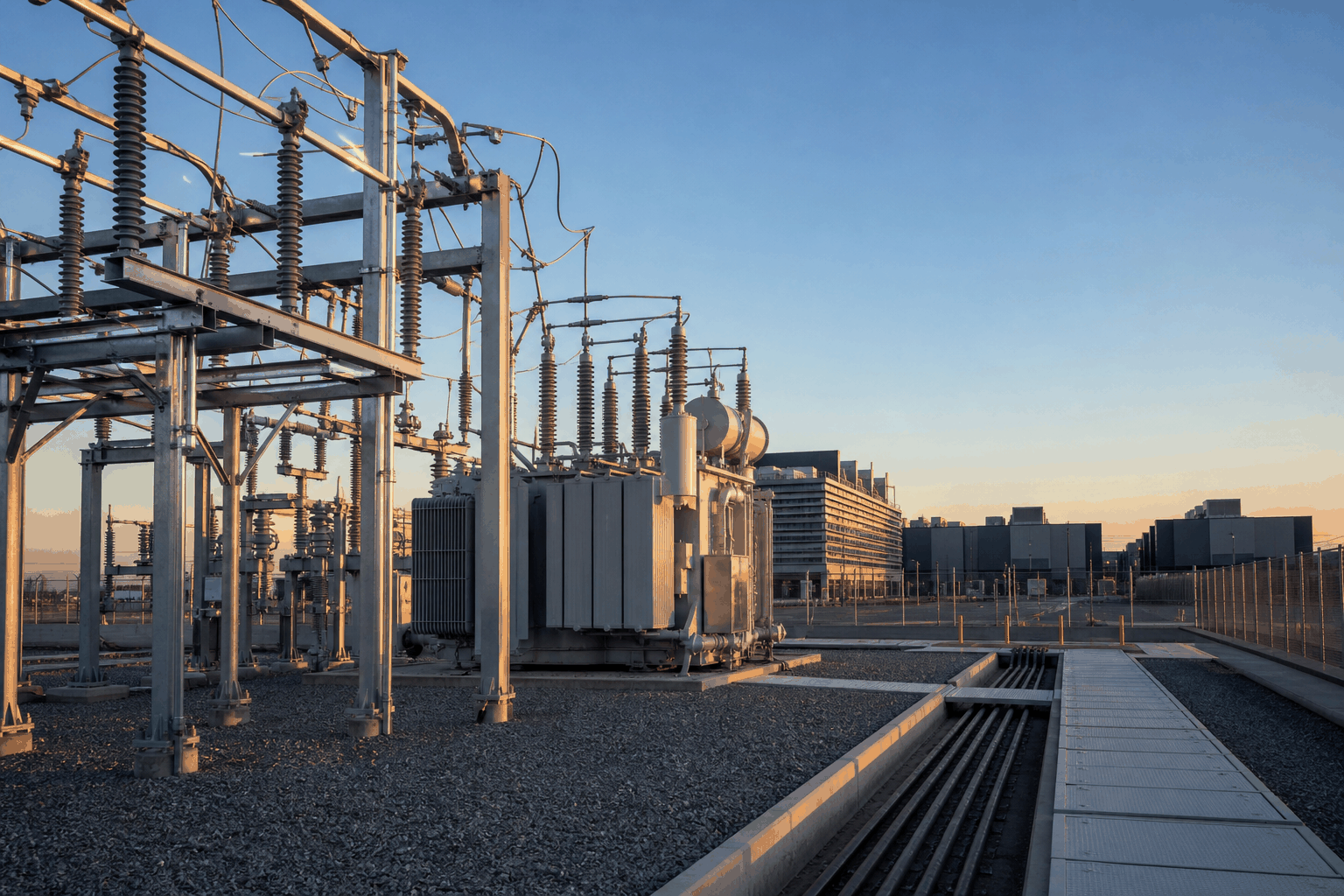
- Power, automation and fire systems: safety interlocks are hardwired at the lowest layer, and independent authorities test and inspect them under code.
- Finance: an independent external auditor reviews the books.
- Aviation: a national regulator certifies the aircraft.
- AI today: checking is still done mostly by the model maker, or with tools it sells.
That last line is the gap. Monitoring alone won't close it. In a recent Carnegie Mellon study, even the best AI monitor missed nearly half of completed harmful actions in a single-day audit test.²
What shared responsibility looks like
- Independent evaluation: third-party red-teaming and benchmarks that vendors neither fund nor control.
- Open, vendor-neutral standards: common formats for logging, audit trails and emergency brakes, so containment works the same way across every model and cloud.
- Customer-owned control planes: the kill switch, the policies and the logs belong to the enterprise, not to the vendor's console.
- A seat for everyone else: regulators, academia, open-source communities, and the domain experts who know how systems fail in the field.
Trust in AI should come from independent checks that anyone can verify. The goal is to trust the model the least, and to depend the least on any one company's word.
References
- LinkedIn News, "Businesses should assume LLMs aren't safe, Microsoft CEO says," Oct 10, 2026.
- A. Muhamed and V. Smith, "MOLE: Detecting Insider Threats in AI Agents," Carnegie Mellon University, arXiv 2609.06966, Sept 2026.
Originally published on LinkedIn on October 11, 2026.